
Substack Homepage SEO: How to Turn Your Main Feed Into a Search Magnet
Your Substack homepage is quietly doing marketing for you all day. The question is simple: is it working hard for you in search, or just sitting there looking pretty?
When someone Googles a problem you solve, your homepage is often the first thing they see. In a few seconds, they decide if you are “their person” or just another tab to close. Smart substack seo turns that main feed into a clear, focused welcome that search engines and humans both understand.
This guide walks you through practical, in-editor tweaks to your title, tagline, about text, featured posts, navigation, and internal links. No jargon, no code, just simple changes you can make in the next hour.
How Google Sees Your Substack Homepage
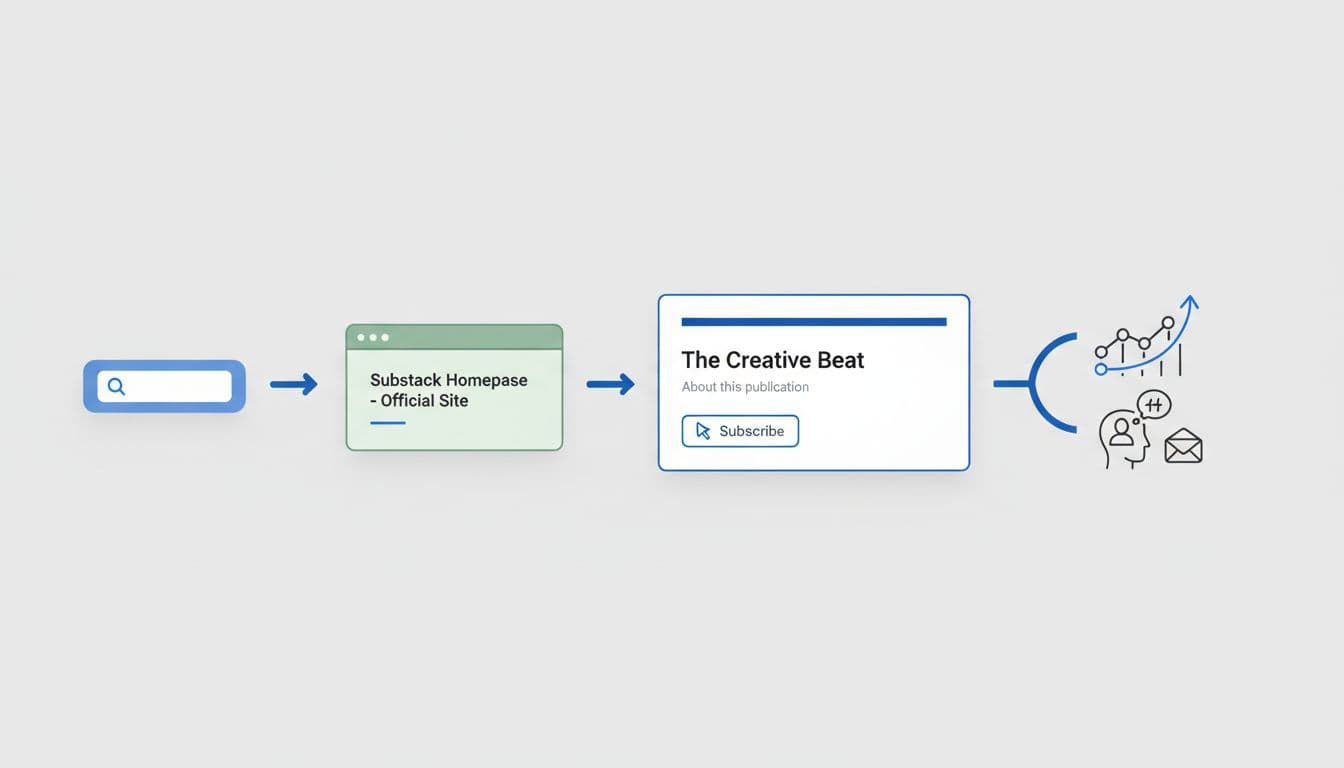
Simple flow of Google search leading to a Substack homepage and email sign-ups. Image created with AI.
Think of your homepage as one big “front page” of a website. Google looks at:
- The title at the top
- The short tagline under it
- Your about text
- The posts you highlight and link to
Then it asks: “Who is this for, and what topics live here?”
The helpful part is that Substack already handles technical pieces like indexing and structure behind the scenes. Their own guide on optimizing a Substack publication for SEO spells out how they support you on the back end.
Your job is not to speak “Google.” Your job is to make your homepage crystal clear to a real person. If a human can quickly answer “What is this about, and is it for me?” then search engines usually can too.
Fix Your Homepage Title So It Attracts The Right People

Annotated Substack-style homepage showing key elements to optimize. Image created with AI.
Your publication name is your H1 headline. It is the big store sign over your door.
Unoptimized titles look like:
- “The Weekly Dispatch”
- “Thoughts by Alex”
- “Sunday Letters”
Pretty, but vague. A stranger has no idea what they will get.
Optimized titles add topic and audience:
- “The Weekly Dispatch: Systems For Solo Creators”
- “Thoughts by Alex: Practical Money Advice For New Freelancers”
- “Sunday Letters On Slow Productivity For Burnt-Out Knowledge Workers”
You can keep your current brand name and simply add a clear phrase after a colon. Aim for:
- Your niche or topic
- Who you write for
This small change helps with substack seo and makes your homepage result more clickable in search.
If you want to see how other writers approach this, Colin Gardiner’s complete guide to optimizing your Substack for SEO includes many real title examples.
Write a Tagline That Works Like a Mini Sales Pitch
Right under the title sits a short line that many creators toss away. This tagline often becomes your search snippet and the first sentence people actually read.
Weak tagline:
“Essays, links, and more.”
Stronger tagline:
“Weekly essays and playbooks that help solo creators turn ideas into recurring income.”
See the difference? The second one says:
- Who it is for (solo creators)
- What they get (essays and playbooks)
- The outcome (recurring income)
Keep your tagline to one short, natural sentence. Use the words your readers would type into Google, not fancy slogans.
If you want more help with wording, Kristi Koeter’s guide to Substack SEO settings walks through where these fields live and what they do.
Turn Your About Section Into a Search-Friendly Story
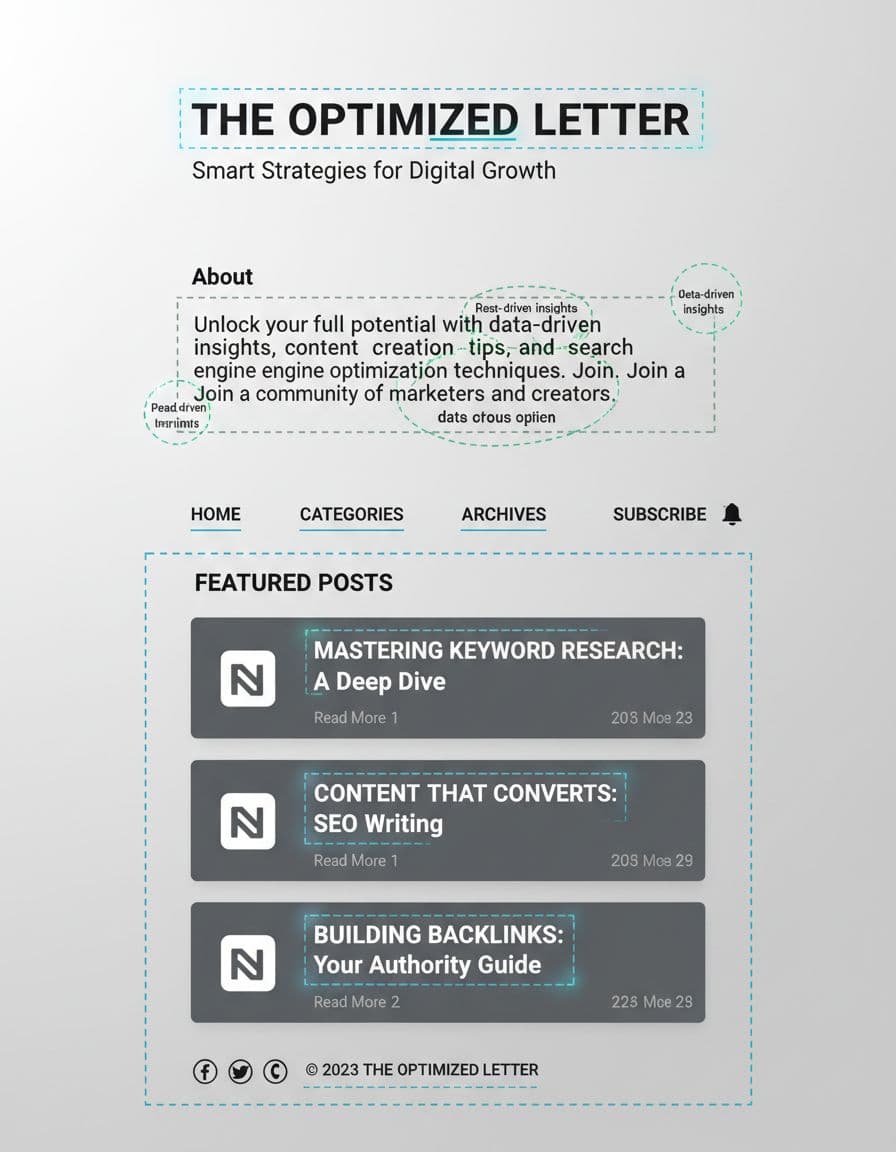
Wireframe of an optimized Substack main feed with clear hierarchy. Image created with AI.
Your about text is not just a bio. It is a short story that answers the reader’s quiet question: “Why should I stay?”
Unhelpful about:
“I’m Jamie, a writer and designer based in Berlin. I like coffee, cities, and books. Subscribe to follow my journey.”
Nice, but it could fit any topic.
Stronger about:
“I’m Jamie, a designer in Berlin who helps creatives build one-person online businesses. Here you’ll find weekly breakdowns of audience growth, simple product ideas, and behind-the-scenes revenue reports.”
That second version includes:
- Who you are
- Who you help
- What problems you write about
Those “problems” often match search phrases. Things like “audience growth,” “product ideas,” or “revenue reports.” This is how you write for humans and still support search.
Use Featured Posts As Your SEO Hub
Featured posts on your homepage are prime real estate. Think of them as your “Start here” shelf.
Many writers let Substack auto-feature recent posts or they pin random pieces. Instead, curate 3 to 6 posts that:
- Answer common questions in depth
- Attract search traffic over time
- Lead naturally to an email sign-up or paid pitch
For example, if you write about self-publishing:
- “How To Self-Publish Your First Book In 90 Days”
- “KDP vs IngramSpark: Which Is Better For First-Time Authors?”
- “The Simple Launch Checklist I Use For Every New Book”
Each of these can rank as a standalone article. By featuring them, you tell Google, “These are my important pages.” Inside those posts, link to 2 or 3 related articles to keep readers moving.
For a smart breakdown of this search loop, the team at Write With AI shared a helpful Substack SEO strategy that shows how posts, search, and subscriptions feed each other.
Clean Up Navigation So People Can Find Their Next Read
Your navigation bar is the map of your publication. Cluttered nav tells readers, “Good luck, you are on your own.”
Aim for a small, clear set of links such as:
- Home
- Start Here
- Best Posts
- Topics or Archive
- About
“Start Here” can point to a page or post that explains your focus and links to your best work. “Best Posts” can be a manual collection of evergreen pieces.
Keep nav labels simple and descriptive. If a stranger cannot guess what happens after they click, rename it.
For more ideas on structure and reader flow, Sarah Fay’s Substack strategy handbook shares patterns that work across many successful publications.
Let Consistency Push Your Homepage Up In Search
Fresh content keeps your homepage alive. New posts and Notes tell search engines that your publication is active and worth crawling.
You do not need to post daily. You do need a rhythm you can hold. For many creators, that looks like:
- One solid post per week or every other week
- Short Notes in between that link back to key guides
If staying consistent is hard, use tools that lower the friction. For example, Dispatchrly (dispatchrly.com) lets you batch-write and schedule Substack Notes on a visual calendar so your feed stays warm even on busy weeks.
For ideas on where Substack fits in your overall publishing order, Melanie Goodman shares data-backed advice in her post on Substack SEO tactics and publishing order.
Quick Substack Homepage SEO Checklist
Use this as a 20-minute tune-up:
- Your title pairs your brand name with your main topic and audience.
- Your tagline is one clear sentence that explains value and cadence.
- Your about section states who you help and what problems you write about.
- You feature 3 to 6 evergreen, search-friendly posts, not random recent ones.
- Your navigation has simple labels and no more than 5 to 7 items.
- Each featured post links to a few related posts to keep readers moving.
- New posts or Notes appear on a consistent schedule.
- Older posts now include internal links to your best guides.
- Your homepage, at a glance, makes it obvious what you write about.
If you want deeper SEO tactics tailored to 2025 search changes, the Substack Writers at Work team has a strong overview in their piece on AI SEO optimization for Substack.
Bringing It All Together
Your homepage is not just a list of posts. It is a quiet pitch that runs 24/7, turning searchers into subscribers when you get the basics of substack seo right.
Start with the words your ideal reader needs to see at the top. Then tighten your tagline, about, featured posts, and navigation so they all tell the same clear story.
Set a 30-minute timer, make these changes inside Substack, and watch how much more confident your homepage feels. You might be surprised how many future readers already want what you share; they just need you to meet them halfway.


